DISCOVER CHIROPRACTIC | NORTHERN MICHIGAN SPINE
  • Wisdom Hub
    • Location & Hours
    • FAQ
    • Clinical Excellence
    • Spine Health >
      • Spinal Orthosis
      • Neck Problems
      • Pelvic Obliquity
      • Headaches
      • Student Athletes
      • Denneroll Pillow
      • Advanced Spine Research
    • Patients >
      • Patient Portal (Members Only) >
        • Advanced Spine Research
        • Cervical Spine Exercises
        • Low Back Exercises
        • Scoliosis Care
        • Advanced Scoliosis Care
        • Accelerated Aging
        • Collagen
        • Asthma and Chiropractic
        • Nutrition for Pregnant and Nursing Mothers
        • Women and Children
        • Pediatrics
        • Carpel Tunnel
        • Aspiring Helpful or Hazardous?
        • 5 Health Secrets
        • Health Resources
        • Nutrition Plans
        • Recipes
        • Food Addiction
        • 7 Key Steps To Long Term Weight Loss
        • Understanding Gluten
      • Clinical Excellence
      • Loss of Curve
      • Refer a Friend
      • Lecture Series
      • Evidence-based Care
      • Medical Massage Therapy
      • Your First Visit
      • Phase I Relief Care
      • Phase II Corrective Care
      • Phase III Wellness Care
      • Chiropractic History
      • The Chiropractic Story
      • HIPPA Information.
    • Virtual Office Tour
  • Health Store
  • Providers
    • The Team >
      • Dr. MJ Wegmann and Dr. Kallie Wegmann
      • Dr. Chelsea Bachelor
    • Refer a Patient
  • 20th Anniversary
Picture

Hidden Hunger

8/22/2018

0 Comments


Dr. Kallie

Picture
Micronutrient Deficiency
Picture
Nutrient deficiencies exist extensively among many members of the U.S. population. Rich, poor, well, or sick—92 percent of the population is suffering from at least one mineral or vitamin deficiency based on the Dietary Reference Intakes.  The entire country is overfed and undernourished. Even if you consume a “perfect” diet, the odds are, something is missing. 
The numbers don’t lie. According the CDC and the U.S. Department of Agriculture (USDA):
    • 9 out of 10 Americans are deficient in potassium
    • 7 out of 10 are deficient in calcium
    • 8 out of 10 are deficient in vitamin E
    • 50 percent of Americans are deficient in vitamin A, vitamin C, and magnesium
    • More 50 percent of the general population is vitamin D deficient, regardless of age
    • 90 percent of Americans of color are vitamin D deficient
    • Approximately 70 percent of elderly Americans are vitamin D deficient

It is a well-known fact that processed junk and fast foods have become staples in the American diet. Fresh, nutrient-rich foods are often considered taxing on time and finances, deeming these food choices a luxury rather than the standard at dinner tables throughout the country.  Along side of the fast food eruption, the soil of farmland all across the globe is deficient in micronutrients.  So really, even if processed junk food and fast food were not a part of the food supply, deficiencies would still be rampant, as soil quality is diminishing at a rapid rate and reducing the nutrient value of produce.  Sick, mineral depleted soil grows mineral depleted foods. The animals that we eat are being fed these micronutrient depleted vegetables and wheat. This means that the meat you buy is also far lower in health producing micronutrients than ever before. The bottom line is: “Sick soils mean sick plants, sick animals, and sick people.”

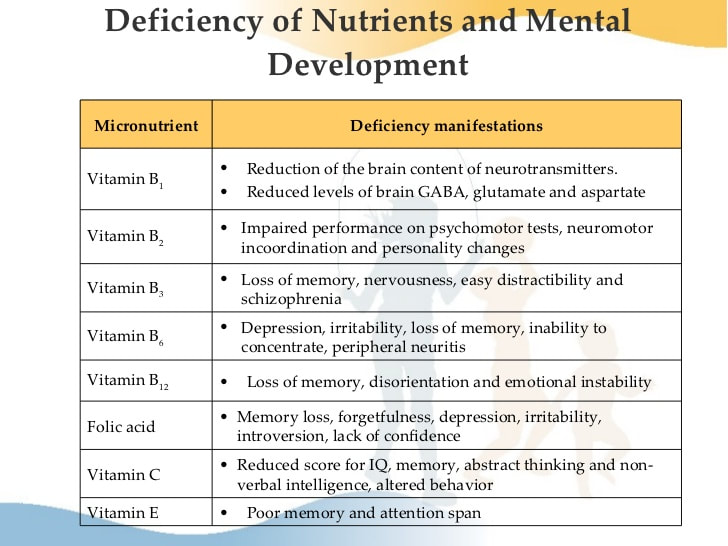
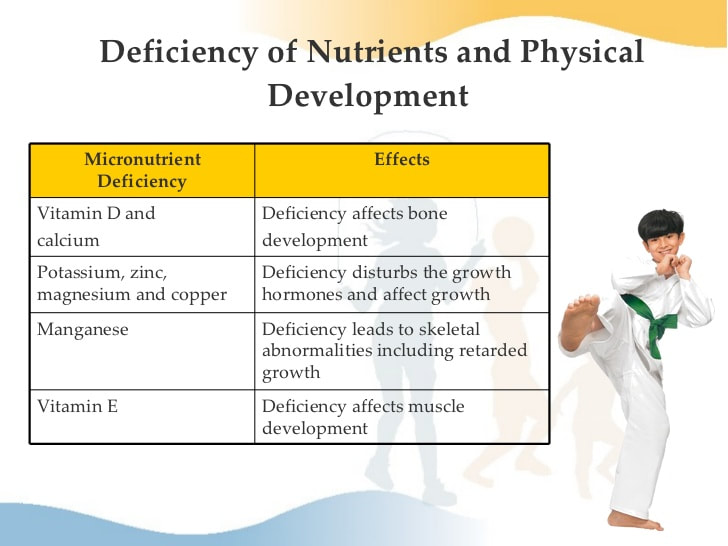
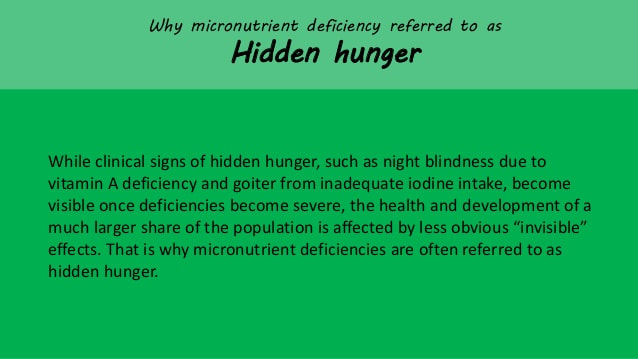
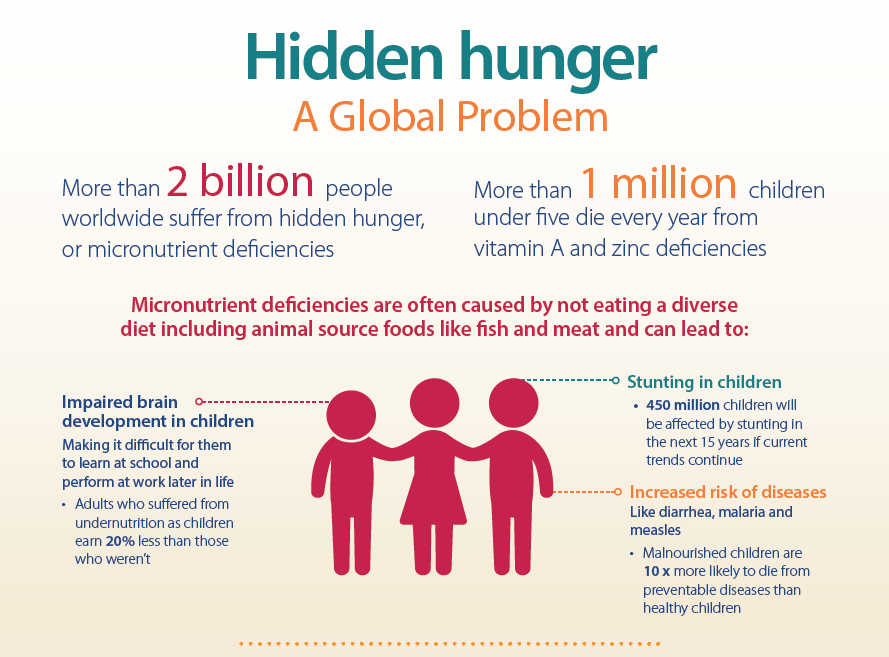
"Hidden Hunger" is a term that was brought about to describe the serious hunger our bodies have for the much needed vitamins and minerals the we are NOT getting.  It's not just about third world countries that are starving for lack of food.  Our own country is starving for real nutrients in this over processed country we live in.  The worst part about all of this, is it effects the children the most!  Kids today are not being raised on produce from the back yard or local farmers markets.  They aren't eating meat from healthy sources.  Fast food and processed freezer meals are feeding our kiddos in this nation.  Yes, we are all crazy busy with non-stop activities for our families, but that does not mean they can only crap food.  When you start to look a little deeper into the dangers facing our children from a lack of nutrition, you may want to take the time to figure out a little pre-meal-planning for the week.  Is it really too much to ask of you to wake up 10 minutes early to put actual meat from a good butcher shop or local farmer into the crockpot?  Is it really that hard to was a few fruits and veggies each day for healthy snacks?  If you plan ahead, you can make larger quantities of food and have left overs for half of the week.  Left overs that are versatile and able to be made into wraps or sandwiches.  The meals that you spend a little more time on make a huge difference in the health of your children.  Below are examples of common deficiencies in children and the effects they have to their mental and physical development. 

I realize that it might not be easier and you are likely to get push back from your child that is used to sugar laden processed food, but keep in mind that you love them and are responsible for their health.  They are not mature enough to make good health conscious decisions every day, nor should they have that pressure.  There are simple things to change first, for example; instead if a sugary soda or fruit juice, pass them an apple or other high fiber piece of fruit and a bottle of water.  Instead of a candy bar, how about a cheese stick?  The statistic below are scary, but preventable especially in our own country. 
Picture
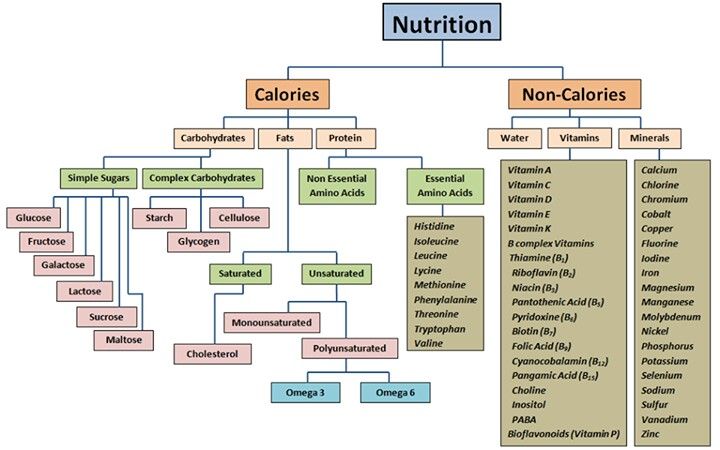
Now going back for a moment, lets look at Macronutrients and Micronutrients.  We looked at Macros and few weeks ago to really analyze our dietary intake.  As mentioned, it's a GREAT beginning step toward grasping your nutritional needs in regards to calories from Fats, Carbohydrates, and Proteins.  Counting Macros helps us know where our caloric intake stands, and gives us the knowledge to make adjustments to our diet to hit our personal goals.  Micros on the other hand are not as easy, but honestly more important.  As your goals for a healthier lifestyle become more advanced and you are successfully living a healthier lifestyle, it's time to look into your micros.  These are the vitamin and mineral levels within your body.  The only way to know for certain what your levels are is through a blood test.  An local family doctor or laboratory can do a simple blood test for you that will show you your deficiencies if you have any.  Many premier athletes have blood tests regularly.  When you study your results, eating becomes more centered around your bodies needs nutritionally, and not just for energy (macros).  Counting macros is not something you really think about as much because by this time you have a great idea of how much of each macro you are roughly consuming.  More thought goes into eating for your micros.  The best part about formulating your diet for micros is you are naturally going to eat whole nutritious foods....why?!?!?!?!  Because you are not going to increase your low vitamin B12 levels from a snickers bar every day.  You may be striving to eat more green leafy veggies for folate, vitamin K, vitamin E, Vitamin K, iron, or magnesium.  Perhaps your vitamin C is low and you need more bright colored fruits and veggies.  These are just quick examples, there are many charts out there to help you.  Side note: please stay away from the "fortified" foods.  Much of the nutritional value in "fortified" foods are lost in processing. 

Picture
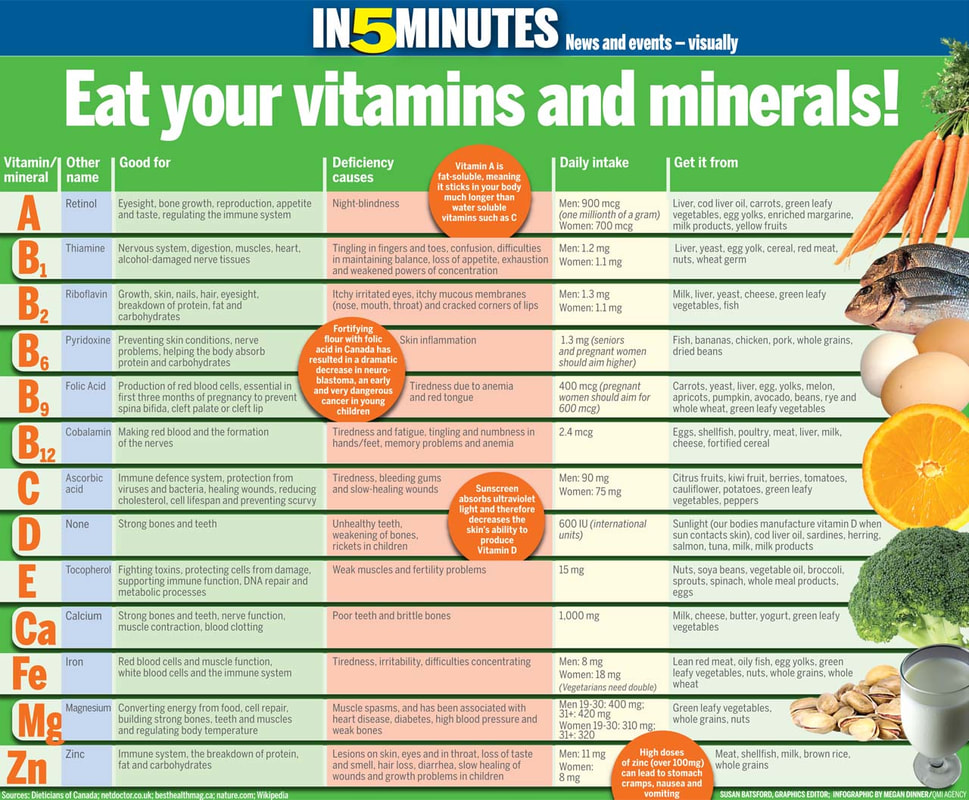
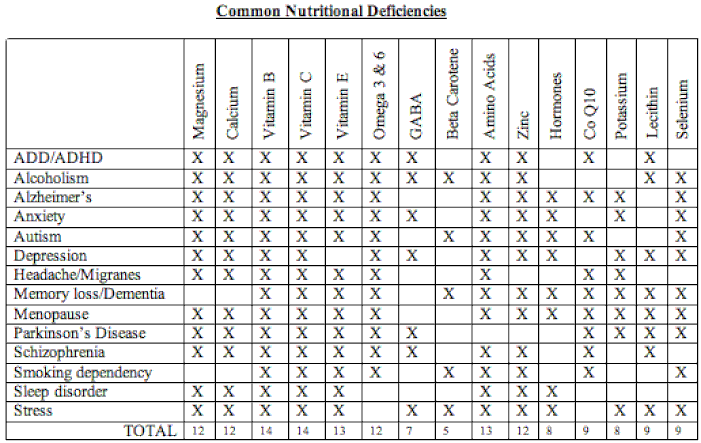
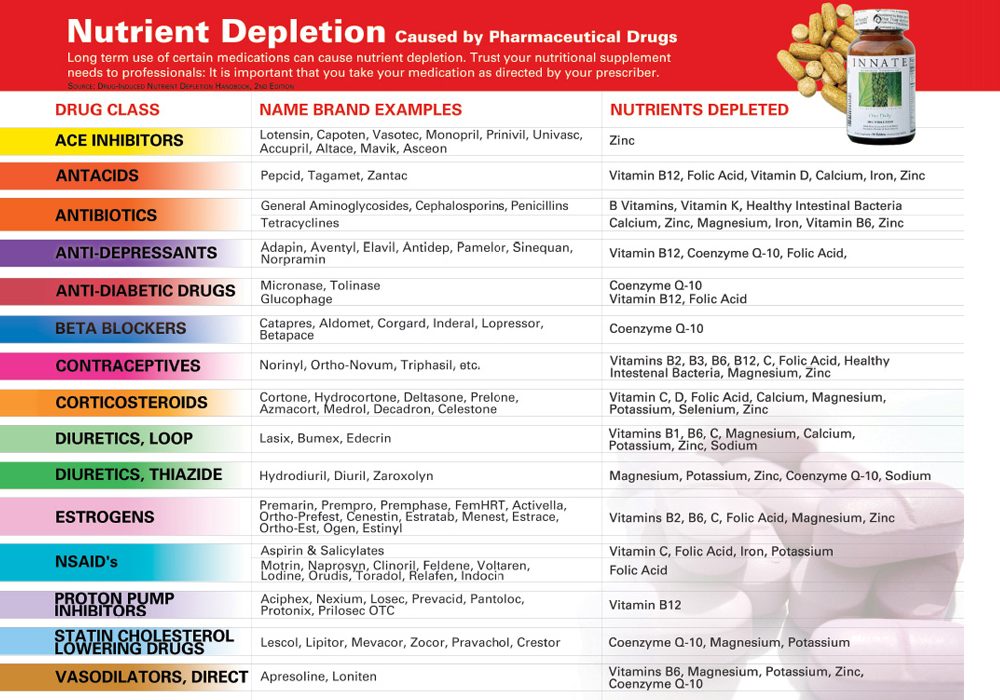
Below I'm going to share with you some common charts.  For the next few weeks, I would like to get more in depth with each vitamin and mineral, it's purpose, and how to get more of it in a healthy way. 
Picture

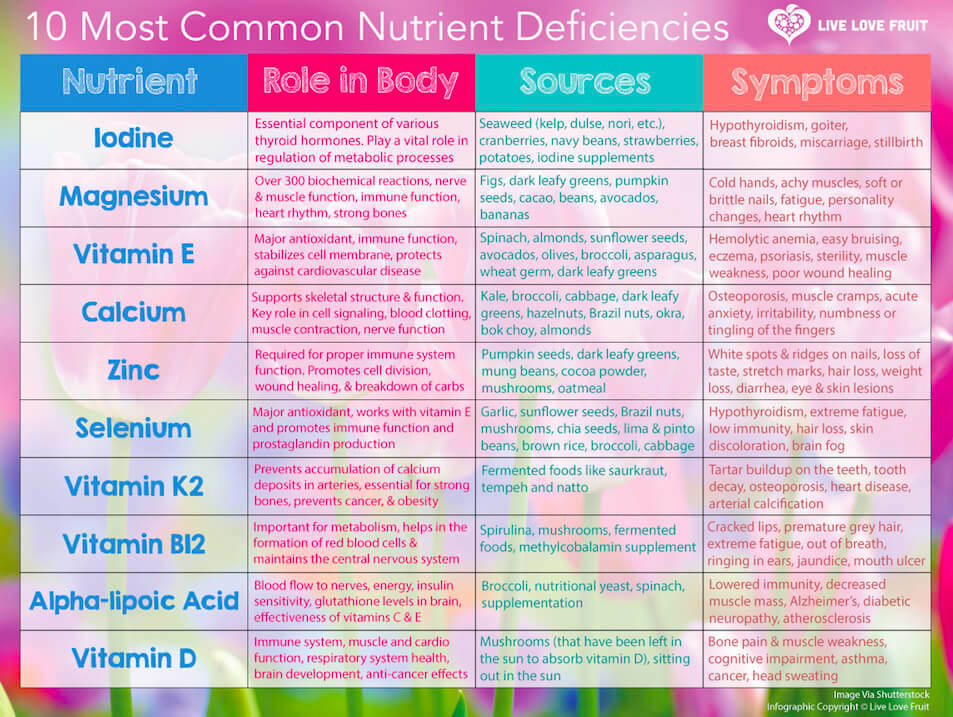
The most common Deficiencies

Picture

Typical deficiencies found within these health conditions
Picture

Nutrient deficiencies cause by common drugs
Picture
Take the next step toward your health and have a blood analysis done.  There is truly no harm that can come from a simple blood test, only knowledge to gain.
0 Comments

Let's Talk Life

8/15/2018

0 Comments


Health and Fitness Series
Dr. Kallie

Picture
Last week I missed my blog time and I apologize to those whom were looking forward to it, but life got in the way and this is okay.  So this week, I'm going to keep this short and sweet.  We are going a little off track, but still express maybe the most important aspect of life...to find enjoyment.  Don't stress each and every day about what you don't have in front of you.  Stop feeling like you are never going to reach your goals.  STOP being in such a hurry for everything to be the way you think it needs to be.  Sometimes, you don't have those controls and you need to find acceptance.  Acceptance that not everything happens overnight and you need to work on patience.   It's okay to slow down and reflect, smile, do something for yourself that you enjoy.
I hear too often how everyone is so unhappy with themselves.  How they need to lose weight to feel better about themselves.  How they don't have time to even think about eating healthy or exercising for a hour a few times a week.  As a mom, business owner, farm owner, etc, I do know the struggles of making time.  Here's the thing; make your "ME" time a priority, and get creative with your health and fitness.  Not all of your "workouts" must be on your own in a gym every week.  Include your partner, kids, coworkers, or friends.  Involving your spouse/partner is a great first step.  Yes, there might be a struggle at first, but at least try to involve them and get creative with your fitness time.  Kids are another GREAT way to not only help you spend time with them and get your workouts in, but it is SO AWESOME to get them active and enjoying new things also. 

My time is not spent in the gym all summer long.  As a family we play together and stay active while enjoying some fun down time.  For instance, we LOVE to bike, go for runs and/or walks, kayak, swim, ride horses, and lift weights together.  The kids are always the first on the bus so-to-speak when I mention we are going for a family run, but you need to make it creative.  Make it a fun game, do a few little races, or explore new places on runs.  I do want to share with you our personal time to give you a few ideas of how to snatch up that little bit of free time and make it productive for your health while also enjoying LIFE. 

I understand that not everyone has kids old enough to do all of the above, but you can also find peace in doing these things alone.  The picture above in the snow with my dog is pretty significant to me.  I am not from Northern Michigan, so I have had a slightly difficult time accepting how long the winters last up here.  The summer of 2017 didn't feel like much of a summer up here and I was dreading another upcoming winter.  The simple thought of cold wintery and snow filled days were dreadful.  When you own a farm, you don't get to take snow days in life anymore.  You go outside to work even when its -20 degrees with wind and snow and deal with it, so naturally you start to feel a little frustration with it all.  Well, I am a firm believer in everything happening for a reason, even when they are not always great things.  The fall of 2017, our big Akita had a spine-stroke and had severe paralysis of one hind leg.  I was intent on doing all I could to restore at least a little "livable" function in that hind leg, so therapy was paramount.  His therapy started immediately and sure enough carried out into the winter.  I had a purpose and a mission that winter, and it was to walk/hike with this pup at least 4 days a week.  Over the course of the LONG, snowy, cold, winter, we worked together and regained 85-90 percent of his function back.  The function for him was the most important, but there was so much more to just the physical therapy.  Emotionally I watched this dog come back to life and LOVE going for our snow hikes together.  Even more than that, I found myself enjoying all of our hikes together.  That was my time to reflect and spend on myself.  Not only was I getting in a killer workout hiking through some of the deepest snow in the middle of snowstorms for around 2+ miles, but I had prayer time and peace.  I actually enjoyed winter last year since I had a purpose and mission.  I looked forward to the fresh snow to hike on during the week.  My point being, stop complaining about how you can't find time for yourself, your family, and fitness, make it a priority and you will make time. 

As an active family, we try to encourage others around us also to step out and do more active things.  In the last few weeks, we have kayaked as an office together, which was so much fun.  Leaving the work environment and enjoying each others company helps the entire team.  This last weekend, our non-profit put together a memorial paddle with a group of veterans.  This paddle was not only our workout for the day, but more importantly we spent time as a family reaching out to local veterans to try and give a little something back to them for all that they have done for us.  Our kids were active with us, and they had the opportunity to meet veterans and their families, while understanding the meaning of what we were doing. 
Lastly, please keep a positive and open mind about fitness, family time, and fun.  Last week we had a little family adventure, we bought an old vintage camper.  It was our project for the week, and what a week it was!  Ideally I had seven days to remodel this little camper so we could potentially use it for the weekend.  It was quite the commitment, but I recruited my little team of helpers and we did it!  The sole purpose was to make this a little playhouse/overnight cabin for our daughters.  A fun little space to hangout in, with the added bonus of bringing it to local camp grounds for fun.  I would be lying if I told you it was super easy, but we did have an absolute blast.  We all worked together, through blood, sweat, and tears (maybe not tears), and were able to turn the camper into the most romantic little hot spot for our 15th wedding anniversary dinner 6 days after acquiring the camper.  You are probably wondering what this has to do with fitness.  I doesn't really, except the fact that I didn't workout all week last week and it's okay.  I didn't beat myself up, get discouraged, quit my training, or anything like that at all.  It was fun family adventure time, that I wouldn't give back for any workouts.  It's okay to not hit every single workout every single week.  YES, you need to stay on track and continue to stay active, but it's okay to find time for adventures too.  As long as you get right back into your workouts, and continue to eat healthy, you are not losing any battle.  Life can pass you by so very quickly, don't focus on what you are not accomplishing.  Rather, focus on being patient, positive, and proactive so you can enjoy all that life has to offer.  I leave you with some fun camper pictures from last week.  Thanks for letting me take the week off last week while we were crazy busy.  I promise to bring everyone more great info next week. 

0 Comments

Functional Fitness

8/2/2018

0 Comments


Health and Fitness Series
Dr. Kallie

Picture
Picture

A few years ago I stumbled upon these two words an it felt like the fitness universe finally came together.  It all made sense and almost everything was right in the world...almost everything.  Now people just need to start embracing health and fitness as a way of life instead of letting the days of their lives slip away from them as unhappy and unhealthy people. 

The definition is simple: functional fitness is a personal fitness program that will help you function at a higher fitness level in daily activities. Helping to function more efficiently and safer.  Training your body to handle real life situations. A huge emphasis on core strength and stability, balance, endurance, flexibility, and overall strength.  It can enhance the coordinated working relationship between the nervous and muscular systems of the body.  Below is a basic list to recognize the benefits:

-Improves balance and coordination
-Is designed to optimize movement
-Enhances athletic performance
-Increases strength and endurance
-Helps your muscles recover faster from injuries
-Strengthens your core muscles
-Involves compound exercises that mimic real life movements
-Suitable for people of all ages and fitness levels
-Restores posture, muscle imbalances, and dynamic stability
-Burns fat
-Relieves stress

So what are we talking about with all this?  Really it's a mixture of training programs that focuses on exercises that are going to help you in you everyday life.  What I enjoy the absolute MOST about functional fitness is that it can be yours to own.  You can decide yourself, or with the help of a trainer/professional, what you really need to focus on in your workouts.  Someone in the military, police, fire dept, etc may choose to focus their workouts on strengthening movements with the added bonus of stability, mobility, etc.  Where someone that is in their senior years will have a primary focus of balance, then strength, posture, stability, etc.  The exercises are even great for young athletes to get started on strength/core training.  This is why I love functional fitness so much, it's adaptable to your personal preference.  When utilized correctly, your muscles learn how to engage properly and that decreases personal injury rates immensely.  The majority of functional exercises use compound movements.  Movements that incorporate multiple muscles and joints at the same time are compound movements.  Now, if you are a bodybuilder and want to increase your bicep peak, by all means have at the billion bicep curls you are doing.  Not going to lie, I love the feeling of a good pump in my biceps by doing curls.  On that note, I will do those cute little bicep curls at the end of my full body workouts if I am not already blasted and I have enough time.  The same goes for leg extensions.  These work on primarily your quad strength and aesthetics, but do very little on the "transfer effect" of daily living strength.  Instead, walk past that machine and do some squatting. 

Time management, the key word being TIME!  If you are trying to get into better shape whether it is losing weight, heart health, getting stronger, etc, your time management plays a pretty big role.  Not everyone has 2 hours to spend at the gym 6 days a week.  I think I am speaking to the majority here when I say it would be darn nice to get a killer strength workout in while doing cardio at the same time in under 45 minutes 3-5 days a week.  Functional training programs put all of this together.  They hit almost all beneficial levels of fitness in a time manageable way for the average person.

Before I glorify this too much, let me pull back and clarify some things also.   Just like a lot of the trends in the fitness industry, this came in as the latest and greatest explosion recently.  It's actually been around for many many years from physical therapists.  Their job is obviously to get you to heal from an injury to get back to your activities of daily living with less pain.  Then the crossfit revolution hit around the year 2000.  These seemed to somewhat mesh together in my opinion.  So why not promote crossfit you may ask...I will never tell you that I don't promote crossfit.  I happily promote anything that helps our society find health and fitness.  I personally do a lot of crossfit, just not in a box (crossfit facility).  This is because I have taken years to tweek my own personal workout programs that I enjoy doing at my schedule and my pace.   As you read last week, I tailor my workouts on how I feel.  I like a mix everything up to keep challenging myself.  My only 2 cents on Crossfit is this: push yourself against yourself, not your gym crew.  Too many injuries are made from coaches that aren't paying enough attention to keep you safe.  Not that it is the coaches fault, but know your limits and stay safe.  A great coach will know how to start you slow, get the patterns/moves correct, and strive to keep you safe.  I know a lot of people that love crossfit because they don't have to plan their own workouts.  It's one less thing they have to think about, and that's great too. 

If you hop online and do a little google search about Functional Fitness, you do get a little bit of a variety and some not so optimal training ideas.  Every industry has their idiots (true statement #sorrynotsorry).  When you take the functional fitness people trying to promote stabilization and strength, with a few dim light bulbs that see an exercise ball, you get some idiot that tries to barbell squat while standing on an exercise ball.  Please use sense when lifting, it may save your life. 

I'm going to put ideas together along with a list of types of equipment for functional training, but there is one last VERY important point to make first.  It is not recommended to jump right into a functional fitness program that you might see on YouTube or a google search.  If you do not currently workout or are not familiar with compound lifting, you need to spend some time finding your weaknesses if you have them (and we all typically do).  This is where injuries happen frequently.  Often people initially exceed their own physical capabilities of the average exerciser and this leads to injury. 
         Stability  Stability Stability

The most important foundation of any training program. 

The three key groups in need of stability training are:
  1. the deep abdominal (transverse abdominal and internal oblique),
  2. the hip abductors and rotators
  3. the scapula stabilizers.
Lower Back and shoulder injuries are by far the most common lifting/fitness related injuries.  Often times, the injured individual has no idea that the majority of the injuries are caused by weakness of the stabilization muscles of that area.  For instance. without strong scapular stabilizers, the shoulder is subjected to serious injury.  The muscles holding that shoulder are directly linked to the shoulder joint - makes sense since it is nicknamed the shoulder blade.  Similarly, your deep core muscles have a huge effect on your lower back integrity.  Research has proven that both the transverse abdoninals and multifidus muscles experience rapid atrophy  after a low back episode. (Multifidius, Transverse Abdonimals, and the pelvic floor muscles function together to stabilize the lower back before movement begins)

*As always, consulting with your primary care physician is recommended before the start of any workout program. 

Besides the above that I have to mention, my personal recommendations for a someone exploring the idea of functional fitness is 1 of 2 things.  One option is starting very slow as a beginner and focus only on body weight exercises.  Basic air squats, planks, pushups, assisted pullups, etc are a great foundation to build strength and stability to carry over into the more difficult exercises.  Having a mirror or now days a selfie video is a great way to assess your body while doing these exercises.  Examples: while squatting: lower yourself so your thighs are parallel with the floor or below, back straight, shoulders up, heels down.  Planks and pushups: body a flat line without sinking or bridging of the pelvis.  Pull-ups: start in the completely lowered position, retract scapulas first, then pull body weight up (assisted with a long band if needed). Secondly, find a gym or fitness trainer to work with that can help you get started.  They can help you with form, addressing weaknesses, and give you exercises to help get you started and avoid injury.
 
My 2 cents about gyms...I can't tell you how often I hear people complain about not being a "gym" person, but seconds later say that they can't find the discipline to workout at home.  You can't say these two things in the same conversation!  Yet, I hear it ALL OF THE TIME!  So I understand the discipline factor of having trouble working out at home, especially in the winter.  I have a home gym myself, but you are likely going to find me at my regular commercial gym.  I too struggle with this, especially as a mom.  If I'm home, I'm doing laundry, picking up the house, making food, putting list together for shopping, etc.  Before you know it, time is up and you need to run and get kids from something, then boom your day is gone and you didn't work out.   Knowing you have to make time to LEAVE and go to the gym for an hourish is easier (for me), it's scheduled in just like the rest of the important stuff.  Summertime has the added bonus of longer day light hours and more workouts outside even with the family, like biking, hiking, paddling, and running.  Now back to not being a gym person...my question is why aren't you a "gym" person?  If you have ever stepped into a gym, then you know there are all kinds of makes and models sort-a-speak.  Not everyone in a gym is a week away from a bodybuilding show, it's actually quite the opposite.  A small amount of people may be ripped up, but I can almost guarantee you that those people are likely to be some of the nicest and happiest that you are there working out too (as long as you have good gym etiquette of course.)  Do you feel uncomfortable about the machines?  If yes, then either spend some time scoping those machines and users out while doing some cardio nearby, or just simply ask.  The people that work at these gyms and even own them are typically very happy to help.  Some trainers even offer up a free training session upon your initial signup, just ask.  Do you feel not strong enough in comparison to others?  This one I know is very common, especially for the men.  They are afraid to walk into the squat rack and squat 45 lbs when the  last dude just squatted 300+.  Believe it or not, that dude that just finished the 300+lbs, once squatted 45 lbs also, then worked his butt off to get to 300+lbs.  Please don't ever feel intimidated by people judging you at the gym.  Nobody knows if what you are benching that day is your true maximum bench.  Maybe you went wakeboarding or wall climbing the day before and are still sightly fatigued, so you are lifting light that day, honestly do you really truly care what someone might think?  What you are doing in the gym is not affecting their life, but it is affecting yours so don't be nervous about others.  I guess that was a long 2cents, but I have been wanting to say that for a long time.

Okay.....my lists for Functional Fitness

Equipment: You may not even need equipment to get started, but below is a list of suggestions to keep things interesting and challenging.
  1. Barbell : by far my first on this list.  (my favorite price of equipment)
  2. dumbbells
  3. fitness rubber bands - multiple sizes
  4. medicine balls (multiple weights)
  5. exercise ball
  6. wooden box (18in, 24in, or 36in)
  7. sandbag
  8. TRX bands
All of the above are "ideal" but definitely not mandatory to start.  I will say, most gyms already carry all of the above for you to use.  As a beginner, dumbbells are a great starter to just slowly add weight to body weight exercises.

Basic Body Weight Exercises
  1. Squats!!: regular squats, sumo, close stance, pistols, split, jump (JUST SQUAT!)
  2. Pushups (keep those elbows tucked in or at the most 45 degrees out)
  3. Pull-ups (banded if needed)
  4. Lying hip raises/hamstring bridges
  5. Lunges: All the kinds, front, back, to the side, switch jump
  6. Planks: on elbows, on hands, one arm, one leg, leg extensions with one arm reaches, rotating hip touches
  7. Burpees, mountain climbers, jumping jacks, jumping rope, knee high running in place
Weighted Exercises: The weights can be the barbell, dumbbells, kettle bells, or sandbag
  1. Squats: All varieties
  2. Deadlifts : many varieties
  3. Lunges
  4. Cleans and Presses
  5. Step ups (box step ups)
  6. Farmer Carries
  7. Bench Press
  8. Rows
  9. Thrusters
  10. Get-ups
Workout example: Let's take the lunges with a kettle bell or dumbbell in the front rack position.  As you go into the lunge, your core is stabilizing your entire body.  Your feet, ankles, knees, hips, shoulders, and arms all work together to make this movement.  These types of compound movements build strength and stability.  Multi-planar movements produce power, strength, stability, and improve reaction time.
How do we put this all together?  Make a goal for how many days in the week you want to incorporate a function fitness workout.  They can be pretty demanding so maybe start with 2-3 days a week.  Aim for at least about 30-45 minute workout.  If you have a time restraint, you can bust a hard workout in under 25 minutes, but you better make it worthy and difficult.  DO NOT try to go all out your first couple of workouts, no need for heart attacks or the inability to function the next day.  You can do these as just body weight at a tempo similar to Tabata.  Your phone likely has a tabata timer app to help you time yourself.  If you are going to push yourself with weights, you can tone the timer part down and/or just shoot for "cycles".  By cycles I mean pick 3-5 exercises to do in a particular order, then repeat them 4-8 times.
Example of one of my cycles: 
  1. Barbell Squats (light) x 10-15
  2. Jump Squats (15lb-20lb dumbbells) 12-15
  3. Barbell Bench (light)10-12
  4. Sandbag Get-ups 45lb sandbag on shoulders Left x 10 and Right x 10
Do 1-4 above in order to make cycle #1, then repeat for as many cycles as you set your goal to.  Sufficient breaks between cycles.

Example for a Beginner:
  1. Air Squats x 10
  2. Push-ups x10
  3. Mountain Climbers x 10
  4. Lunges Left x 10/ Right x 10 or 5 left and 5 right
  5. Burpees
Do 1-5 above and cycle 4-8 times.  Take a 1 minute break between each cycle.

Example for Intermediate:
  1. Thrusters (barbell or Dumbbell)
  2. Sandbag Row
  3. Weighted jump squats (dumbbell)
  4. Pushups
  5. Planks
Same idea, 1-4 for 10 reps each, break, and cycle for 3-5 more times.

The idea is to build strength while also getting your heart rate up to get some great cardio work in.  You can always add in a slower run or bike ride to for more aerobic aspects to your workouts, or just do those things on our active recovery days.  The first few weeks, you may simply want to write all of the exercises down, take a sneak peak on youtube how to do them if you are unsure, and then just practice form and flow before you make them into a full workout.  Like I mentioned earlier, building a strong core and posterior chain (back, booty, and legs) is far more beneficial to every day living than a little 2 mile elliptical stroll and bicep curls if you are really looking at getting healthier and stronger.  Not saying the elliptical and curls are bad, because they are way better than your couch and curling a beer to your lips, but I think you know what I am getting at for this segment.  I have seen some pretty cool animations of proper lifting form.  If I find the links, I'll definitely try to put them together.  Maybe next week I will go into form.  Form is Key in the fitness world, and the absolute foundation to a healthy program.

If there is interest, I can start throwing a few workout programs on here to help everyone.  They will basically be my workouts and you can tone them down or go harder, your preference.  My weeks do incorporate these functional fitness days, but I also mix in many pure strength training and cardio specific days into my schedule.  Together they hit all aspects of training.  Even though I am approaching forty, I still consider myself an athlete.  I will continue to work hard to keep myself worthy of that title. 

Check out this link below.  The initial video just gives you an idea of what functional fitness is about, plus gives you a little extra motivation.
f45training.com/


0 Comments

First Steps in Fitness

7/25/2018

0 Comments


Health and Fitness Series

Dr. Kallie

It's time to take this series down the fitness road and start exploring.  We have spent the last few weeks getting you started healthy eating, and learning how to manage your diet, so the next step is getting you moving.  It is true, you can lose a lot of weight and get healthier by diet alone, but you will not get fit with just diet.  You can go ahead and lose 20, 50, 100+ pounds, but if you have not exercised, you still won't be able to comfortably climb stairs, go for a jog, or even bike ride without getting fatigued.  I think a lot of people set out to achieve the wrong goals, they want to "look" good instead of feel good.  The coolest thing about fitness is if you are trying to "feel" better by exercising, the looking better part nearly comes naturally, even more so if you are eating healthy.  I understand vanity in our society is HUGE, especially with social media pictures at our fingertips all day.  You must have the understanding that so many of those pictures are not real.  The filters and adjustments are crazy!  Not to mention many of those people make it their career to constantly post near nude fitness pictures daily.  Nothing can drive me more crazy than seeing pictures of women with their goods hanging out everywhere and "lifting" weights, especially when they are not the least bit sweaty and you know darn well that if they were at a real gym they would be kicked out for simply being unsanitary....gross!  I am 39 years old and I bought my first gym membership the summer of my freshman year of college, so I was 19.  That calculates to roughly 20 years (give or take a few months off for moving) of gym memberships, and many many many day gym passes during traveling.  I've seen a lot, and I can tell you I've never seen those insta-famous social media models in any of those years, thank heavens!  

Anyway, off my rant and back to the importance of fitness.  The definition of fitness straight out of the dictionary; the condition of being physically fit and healthy.  The definition of physically fit out of the same dictionary; to be in a state of health and well being. Physical fitness is defined as the body's ability to function efficiently and effectively in work and leisure activities, to be healthy, to resist disease, and to react to emergency situations.  I know these seem pretty self explanatory, but if you think a little bit deeper here, some people that are "thin/skinny" may NOT be physically fit, and on the flip side, you can be overweight and be physically fit.  This is a debate that many argue with me and it is my personal opinion, but I believe you are far healthier to be 10-20 pounds overweight and able to physically keep up with workouts of any kind then those that are lean and not able to run even a mile.  Fitness does not have to be defined as lean.  The purpose of fitness is to FUNCTION optimally in a healthy state.  Function is a huge word and I am going to keep bringing it to you.  Fitness is having a healthy cardiovascular system, meaning your heart and lungs are not taxed and tired from simply walking up a flight of stairs.  The heart and lungs function to move blood and nutrients throughout your body with ease.  The only way to keep the cardiovascular system happily working in harmony in you body is to make it work. 

Heart Rate Zones...Let's get to it!

Quick Disclaimer: these are all generalized calculations.  As with any calculations made or programs started, it is best to be under physician supervision if you have preexisting conditions or other concerns.  These are not personal physician based plans for just you. 

There are various Heart Rate Zones to understand and those include resting, target, reserve, and max.  There are 5 other Zones to help describe percentages of your heart rate under working conditions.  The general calculations for Heart Rate are below:

Resting Heart Rate: heart rate at rest; typically taken as an average of calculations counting beats per minute optimally in the morning before you arise from bed.

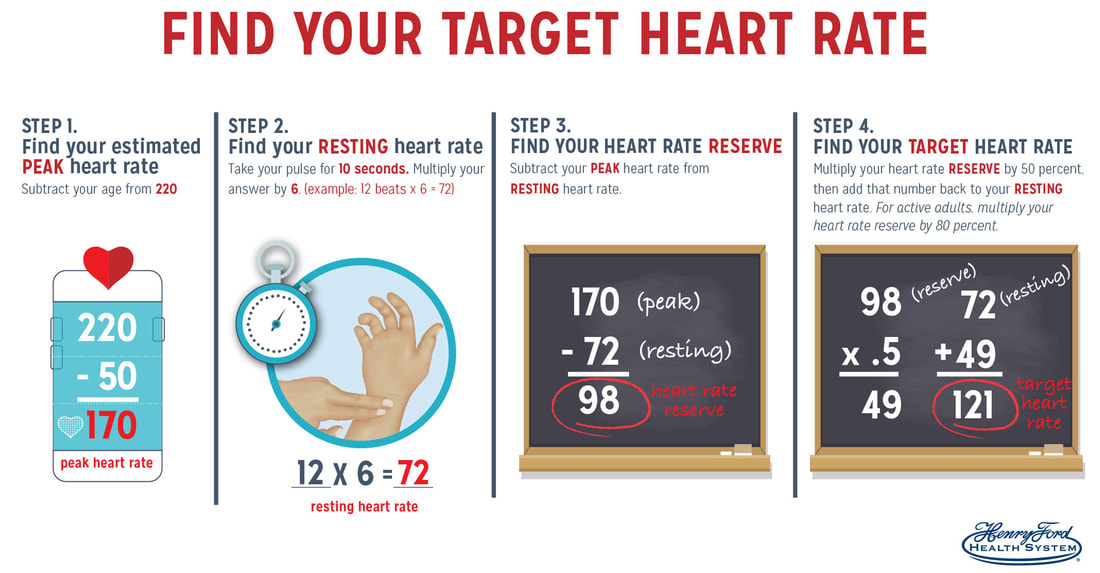
Maximum Heart Rate = 220 - Age

Heart Rate Reserve: the difference between resting heart rate (HRrest) and maximum heart rate (HRmax).  
                         HRR = HRmax - HRrest. Heart rate reserve is used when determining exercise heart rates.


Target Heart Rate: is defined as the minimum number of heartbeats in a given amount of time in order to reach the level of exertion necessary for cardiovascular fitness, specific to a person's age, gender, or physical fitness.

Picture
Example:
Myself: 
Max Heart Rate         220 - 39(my age) = 181 beats/minute (Max HR)
Resting Heart Rate      50 beats per minute (fitbit and machine morning average)
Heart Rate Reserve      181 - 50 = 131 beats/minute
Target Heart Rate    131 (reserve) x .5 (50%) = 65.5  --------65.5 + 50 (resting) = 115.5 Target
*these are specific to my and my personal calculations for example purposes


ZONES 1-5

Zone 1 - Healthy Heart Zone: 50% - 60% of your Max HrEasiest, Most Comfortable Zone, Beginner Safe
Light walk with friends or pet
*Exercise Benefits:
Body fat decreases, blood pressure lowered, cholesterol lowered, muscle mass improvements, decreased risk for degenerative diseases, safety high.


Zone 2 - Easy Transition Zone: 60% - 70% of your Max Hr Fat Burning Zone – you can train for extended periods of time in this zone. 75% - 85% of all calories from fat as fuel, Beginner Safe, early intermediate
Easy power walk or light jog, able to still talk with ease
*Exercise Benefits:
Gain muscle mass, lose fat mass, strengthen heart muscle, fat utilization zone.


Zone 3 - Aerobic Zone: 70% - 80% of your Max HrAerobic Zone – Moderate energy expenditure. Running is a great example.  You can speak, but not easily hold a long conversation with ease due to heavier breathing. 
Intermediate
and early advanced
*Exercise Benefits:
Improved overall functional capacity with increase in the number and size of blood vessels, increased vital capacity, respiratory rate, max pulmonary ventilation, pulmonary diffusion, increase in size and strength of the heart, improvements in cardiac output and stroke volume.


Zone 4 - Threshold Zone: 80% - 90% of your Max Hr
Anaerobic & max caloric burn, intense exercise, breathing hard/panting
Advanced
*Exercise Benefits:
Max fat burn, but you must be fit enough to train with some oxygen present for additional fat burn. No fat burning if exercising above fat burning heart rate,  high total calories burned during exercise, carbohydrates as source of calories/fuel, improved VO 2


Zone 5 - Preformance Topline Zone: 90% - 100% of your Max HrPeak Race Zone – Athlete Only Zone! Advanced +
All out training, example: sprints
*Exercise Benefits:
Highest total calories burned, but lowest percentage of fat calories.  This zone is only for the very healthy and fit!!! Spending too much time in this zone, even for elite athletes can be painful, cause injuries and lead to over training, which leads to poor performance!


Picture
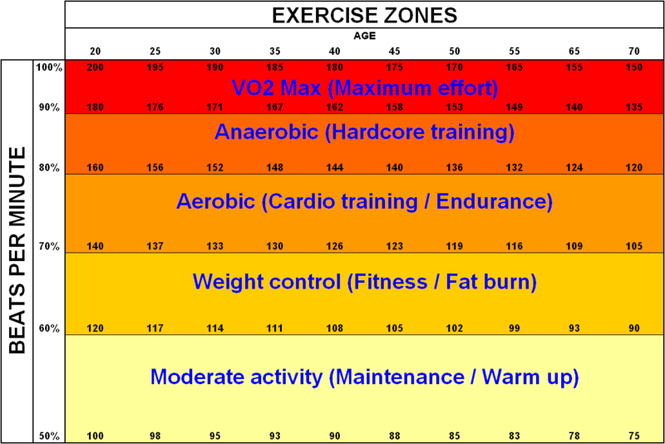
The chart above is one representation on the heart rate zones with the heart rate percentage on the left and age on the top of the graph.  Again these are relative not exact because everyone is different.  Depending on personal goals, you can aspire to reach zones.  In the light yellow above, this zone should most definitely be reached by everyone DAILY.  It is basically movement in general.  Even if you had a great and super intense week at the gym or marathon training, whatever, you should still get some movement in at least in the light/moderate zone daily.  The darker yellow is labeled obviously as the "fat burning" level and it is that, but it's not the only level that will lose fat.  I find that there is a strong confusion in the fitness industry that leads us to believe that just a little Zone 2-3 workout here and there will be all we need to get fit and stay fit.  Yes, it's totally better than nothing BUT, you don't keep pushing yourself.  On the contrary to what you may think and feel some days, our bodies physically adapt VERY quickly to exercise.  Over just the course of a few weeks, your heart becomes more efficient and the workouts become easier.  You stop pushing your heart to get stronger and stronger.  There is a point that you do indeed need to not keep pushing so hard and maintaining that fitness achievement is super important, but keep pushing yourself and your body a little bit more each week or workout, etc.  The fallacy that you don't burn fat when doing anaerobic workouts is just that, a fallacy.  It is true that our bodies switch fuels dependent upon workout load.  As the rate of our breathing increases in anaerobic workouts, which decreases oxygen, we switch from burning fat as fuel to glucose.  So technically during those shorter duration of time that we are in a high intense/hardcore workout, we are burning up glucose as fuel, but briefly.  The high intensity training end result is the body staying in "training mode" post training for a few hours following training.  So much research is out there showing us that high intensity training will keep the body needing more fuel (burning fat because it's post workout time) longer, PLUS you are going to burn more overall calories during a high intense workout than an aerobic workout just due to its workload.  More calories burned = bigger deficit  = weight loss if that is your goal.  I know I touch a lot on weight loss for everyone on here, but I am going to start including tips for my athletes also.  In regards to the heart rate zones for athletes, hitting those two top zones is crucial in making performance improvements.

Next week I will go more in depth with my training schedule, but I wanted to briefly touch on it now to put the heart rate zones into more perspective for training purposes.  I schedule my training for all eight days of the week (I know there are only 7 days in a week, my workouts typically fall into an eight day cycle), this includes an active recovery/rest days.  I don't structure this program on particular days of the week, because it's impossible with life interfering.  My entire week is scheduled around my hardest day of the week, for me that is leg day.  Leg day is the lightest cardio but most strength challenging day of the week.  This is the day I try my hardest to push through barriers and work at my highest peak.  Leg days also leave me in a pretty good world of hurt from muscle soreness.  My typical week is designed below with a lot of room for change ups.  Nothing is set in stone, I just try my best to get the following in for my week.

                  Day 1:                              Leg Day                                                                                          Zone 2-3
                  Day 2:                             Mix Day; Cardio and Strength Training                             Zone 3
                  Day 3:                             Active Recovery/Rest day                                                        Zone 1-2
                  Day 4:                             High Intensity Training                                                           Zone 4-5
                  Day 5:                             Long distance Endurance Training                                     Zone 3
                  Day 6:                             High Intensity Training                                                           Zone 4-5
                  Day 7:                             Mix Day; Cardio and Strength Training                              Zone 3
                  Day 8:                            Active Recovery/Rest                                                                 Zone 1-2
 
There is a lot more detail to bring to you about the training schedule above, but I can't squeeze it into today's post.  Next week I'll explain to my personal preferences to my training program, and why I have structured the program the way that I have for myself.
Picture
0 Comments

Is Carbohydrate Cycling Right For You?

7/10/2018

1 Comment

 
Picture

Health and Fitness Series

Dr. Kallie

What is carb cycling?  If you are keeping up with this blog, you are likely understanding a lot more about carbohydrates in our diets.  For this blog, we are adding another health and fitness weapon to your arsenal. 

Carb Cycling is a planned alteration of your carbohydrate consumption over a chosen time period, or an enjoyable and capable lifestyle habit.

Carb Cycling is considered by some to be an aggressive and high level nutrition strategy in order to prevent a fat loss plateau, plus help maintain a good metabolism without hindering workout performance.  This last sentence is obviously pretty loaded, so I'm going to break everything down for you.  Yes, carb cycling is a nutritional strategy, one in my opinion is GREAT!  I LOVE it and utilize it often.  I don't feel it is "aggressive", but rather easier to use since it gives you some wiggle room and is not as difficult.  I will say that I don't think carb cycling is for beginners trying to figure out how to lose body fat while making positive lifestyle changes.  If you are just learning how to count calories and macros while trying to incorporate exercise, keep at it my friend and keep making those changes to your lifestyle.  Now, if this isn't your first rodeo and you understand the macro stuff, carb cycling may be something you can throw into the mix.
 
The Benefits of Carb Cycling
  • Keep favorite meals on your menus
  • Keeps hormones balanced
  • Aids in muscle recovery and prevents muscle wasting
  • boosts weightloss
  • helps prevents metobolic dip
  • helps prevent hunger and fatigue
  • Increases energy and endurance
  • Easier to manage and maintain since it is less restrictive

The basic idea behind Carb Cycling is to plan a certain amount of days when you eat higher carbs verses lower carbs.  There are MANY different varieties and ways to cycle.  Some people will try to sell you plans saying one way is better for fat loss, another is better for muscle gain, etc etc.  Personally, I go with what my body tells me.  I have structured my carb cycling based mostly on my workouts and water retention. 

After spending a lot of time discussing the Keto diet last post, I am hoping I left you with an understanding that carbs are NOT bad.  To revisit for a brief moment, Carbs are needed as a fuel source for your workouts.  Carbs replenish glucose and glycogen to prevent fatigue and help repair tissues.  When in ketosis, you use fatty acids (fat) as a fuel to live and even workout, but you will not have much success in building muscle without glucose (carbs).  Those carbs aid significantly in recovery and support of muscle growth, cause the body to burn more calories, and provides you with ENERGY.  One of the biggest fallacies is that eating carbohydrates makes you fat and even eating carbohydrates at the wrong time will make you fat.     
                                                                 WRONG
Eating too many CALORIES makes you fat. 
Insulin has unfortunately been thrown under the bus A LOT the last few years.  Once again, Insulin does not make you fat, overeating does.  Revisiting the job description of Insulin and why people presume it's bad:
  • Insulin stops burning fat and tells the body to start burning what's available from what you just ate.
  • Insulin causes the body to store a portion of the energy you just ate (from food) as body fat.
So naturally people think:
high carbs = high insulin = burn less fat = store more fat = fatter & Fatter & fatter
                          or
low carb = low insulin = burn more fat = store less fat = stay lean

HOWEVER, this completely violates the principles of energy balance, which is how much energy you eat and how much energy you burn. 

Weight gain results in a surplus of energy stored as fat.  You cannot lose weight without an energy deficit.


For those into building and maintaining muscle mass (that should be all of you since muscles increase metabolism), insulin actually decreases catabolism.  

Muscle growth = increase in carbohydrate diet = increase in glycogen: which improves performance = more strength & energy for workouts = helps progressively overload muscle fibers = muscle growth

Research shows that low carb/low glycogen levels post workout reduce cell signaling related to muscle growth.  Also, resting cortisol levels rise and testosterone decreases with the lack of glucose/glycogen.

So how do you carb cycle?  Lets talk about ways to match lifestyles and activity levels.  Another reminder here, go ahead and read this post, but if you are still working on your macro counting and trying out other things like intermittent fasting, don't rush to jump into this until you are ready.  It's easy to bombard yourself too early with everything without enough time to make the other changes habitual and a lifestyle.  Come back to this when you are ready and want to try it out. 

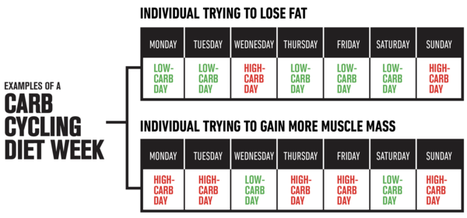
For carb cycling, you are going to continue to follow your calories and macro that we already calculated (see macro post here).  Those macros will now fluctuate with carb cycling.  As I said earlier, there are many different "cycles" you can use and I'll give you examples.  Basically you are going to increase and decrease your carbohydrate intake depending on the day.  Some people will tell you to stick with a pretty strict cycle of maybe a 1:1 ratio of a high carb day followed by a low carb day.  Others use a 3:1 ratio of three low carb days followed by 1 high carb day.  Another possibility is a fluctuated carb cycle of low, moderate, and high carb days throughout the week.  Lastly, there are those that like to live on the wild side and decide to put no carb days into the mix.   The other macros are not going to change significantly.  The idea is that the lower carb days, are days that you caloric intake will be lower, even lower than maybe what you have calculated for your daily caloric needs.  An important factor is not to decrease your protein consumption.  So yes, you will still macro count or go back to macro counting for a little while until your food choices become natural and you just "know" what you are eating. 
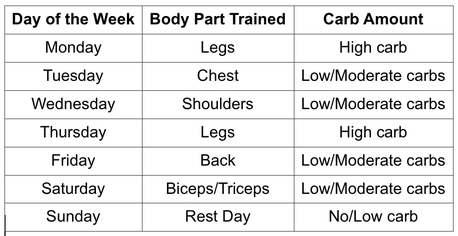
Planning your personal cycle...it's all about your personal needs.  If you are getting to the point of trying this, then I am assuming you are pretty disciplined with your workouts plus you know your caloric needs.  Nobody is going to tell you what is right for you, only you will know that with experimentation.  For me personally, I know I need high carb days thrown in when I have a hard workout planned.  I don't have a particular "plan", I base my cycle on my activity.  My leg days are ALWAYS high carb days.  My gym days that I do a mixture of Olympic lifting/powerlifting/crossfit are also high carb days.  Days that I run, bike, kayak, and weight train are moderate carb days.  My rest days are no carb days (unless its a cheat day).  Honestly thought, cheat days are not to much of a "cheat" day if you are putting yourself through a killer hard workout. 
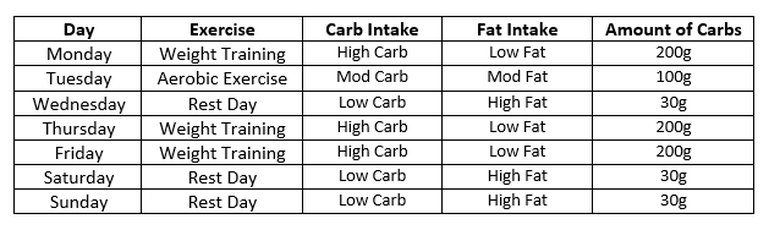
Here are a few examples below:

Picture
Picture
As you can see from this picture, the plans are put together differently with different end goals.  Both of these cycles are for the individual that is in training.  By that I mean you that is exercising.  If you are working out, it also means you are training.  You don't have to be "training" for anything other than staying alive and healthy longer.  The top example is this chart, for me, is more favorable.  One of the reasons I enjoy cycling besides using it to keep myself in check with macros, is to have the ability to manage my water retention.  If I cycle 2-3 days on lower carbs, I will lose a lot of water that I am retaining.  I'm going to go down the personal road for myself here, so forgive me please.  If I have something that I want to where that is very fitting, or I want to look more cut for an event, I'll carb cycle for 3-4 days before the date.  The carbs get low, water drops, you look and feel less bloated.  Keep that little side note in your brain for a later date. 

Picture
Picture
The above chart is maybe the easiest to follow and I think I like this one the best.  I don't think you necessarily need it to have a day of the week mapped out for you, but it may help.  I also wouldn't binge on the "high fat" aspect of the chart, just stick with your macros remembering to keep your proteins up.  The fats can fill some of the caloric needs without all of the carb calories, but it's okay to fall under a little too.  Remember that fats are 9 calories per gram instead of the 4 calories like carbs and proteins, so they add up much faster.  Also with the above, you can switch out any of those rest days for aerobic exercise.  Get a extra run/walk/hike/paddle in...it's summer and you should be enjoying all the time you can outside!  Please try to remember to keep those carbs lower and in check on those days with less activity, it's a pretty important key.  Also, hitting back to making this a lifestyle and not a "diet", try not to be too hard on yourself.  Make this easy by learning how this works for you and easily use it every day.  If you know that you are going to be sitting in meetings all day next Tuesday, try to grab a salad instead of a sandwich, walnuts instead of m&m's, beef jerky instead of crackers.  Things do start to become second nature, I promise.  As I mentioned earlier, you activities will easily start to dictate you eating.  For me, when my cycling is on point, I can't go longer than three days without watching my weightlifting struggle, or my mileage decrease.  That is for me though and may not be for everyone.  You will know when your body NEEDS to refuel and recover.  Lastly on the csrb cycling, after a few weeks or even a couple of months, hit the reset button.  Throw your entire system off by having 3- 4 high carb days, or maybe absolutely no carbs for 3-4 days.  Our bodies adapt so fast, and our brains need to make sure we mix things up.  Your metabolism needs breaks and mix-ups to keep it burning healthy. 

Nutrient Timing
Nutrient timing is planning your food intake at a particular time centered mostly on your workout schedule.  Some make sure to have certain nutrients upon waking and going to bed also, but I'm only going to briefly hit on the nutrient timing around workouts.  The research has shown that there is a pretty significant importance in planning to digest particular nutrients pre and port workouts.  Most importantly the "window of gains" post workout that you will likely hear from the muscle building world.  They used to believe that you only had about 30 minutes to make sure your body would optimally uptake all the nutrients it could post workout from whatever you were trying to feed it.  Now they are getting a little bit more relaxed and saying you don't need to rush.  My thoughts, you absolutely DO benefit from a nutritious post workout meal/shake.  Physiologically, if you just finished a pretty intense workout, your cells are depleted of nutrients, particularly glucose, and need to refuel for repair, which lead to growth and strength.  I don't feel however, that you need to pack a full meal to the gym and eat it as soon as you finish your last rep.  Refuel with healthy carbs and protein on those hard days, your body needs it!  In relation to the intermittent fasting post, when you come out of your fast make sure you are not instantly hitting the carbs.  Put a meal together with healthy proteins, fibrous carbs, and some fat first.  Save those yummy carbs for after your workouts.  The most optimal time to consume your carbohydrates is after your workouts.  The key to understanding Nutrient Timing is understanding when your body is in need of particular nutrients. 
  • My personal nutrient timing: I come out of my intermittent fast one of two ways
  1. I have a Beet Juice (black cherry flavored & naturally sweetened shake with a scoop of collogen protein "pre-workout", then I workout, and eat a slice of homemade bread with honey and a protein shake "post-workout"
  2. or: I have protein (typically grilled chicken breast) and veggies for my first meal.  This is then followed by the above #1 prior to my workout. 
I hope that makes sense to everyone.  The number 1 above will typically always by my pre & post workout routine for nutrition.  This schedule all depends on what my day looks like and when I am going to fit in a workout.  For days that I just do cardio and take a weight training day off, I exclude the bread and honey and eat berries to fill my sweets for the day instead. 

Soon I hope to start putting together a few workout ideas for everyone to help you get started, if you haven't already, on your fitness journey.

1 Comment

3 Factors That Impact Your Health

7/8/2018

0 Comments

 
Picture
Allostatic load is the physiological wear and tear on the body that results from ongoing response to the being alive. It was coined in 1993 by two Medical Doctors. There are three forms of life “stress” (load) that every human encounters every single day of their lives. These stressors falls into three categories:
1. Emotional
2. Physical
3. Chemical
You can also think of these 3 as:
1. Thoughts
2. Traumas
3. Toxins.
We refer to those as the three T’s.

The allostatic load is a combination of the measurements of different factors that would increase the stress in the body. Things such as aging, weight, height to waist ratio, stress, medication use are all part of the equation. Many people experience gradual declines in physical and cognitive abilities even in the absence of clinical diagnosable disease. Increased stress has been associated with many health conditions that are widely discussed in the medical literature. Some of the most familiar include cardiovascular disease, gastrointestinal disease, and hormonal dysfunction. Prolonged or chronic stress impairs health through a complex array of physiological functions initiated by the release in the hypothalamus of corticotrophin releasing factor, CRF. CRF triggers the release of adrenal corticotrophic hormonal, ACTH, from the pituitary which in turn causes the release of cortisol from the adrenal cortex. Cortisol helps maintain blood glucose levels. Chronic stress or chronic administration of pharmacological cortisol preparations causes insulin resistance, hypertension, redistribution of body fat, and decreased protein synthesis. Further more stress compromises the immune system. The immune system is weakened through a decrease in the production of blood cells, antibodies, and gamma globulins but also through the inhibition of pro and inflammatory interleukins, tumor necrosis factor, and gamma interferon.

We have the best life saving and emergency medicine on the planet, yet the US leads the world in cancer, diabetes, and heart disease! Why? We pay little attention to ALLOSTATIC LOAD. Stress can have a wide ranging affect on the emotions, mood, and behavior. Equally important but often much less talked about are the accumulative affects of stress on the various systems, organs, and tissues of the body.

Northern Michigan Spine and chiropractic’s unique position is: Regular CHIROPRATIC increases the body’s ability to respond to STRESS, the (allostatic load)!! It does this by influencing the body’s response to it’s environment through the nervous system. This is a big thing to understand about good Chiropractic. When making decisions about your health one must discuss with their doctor the allostatic load the decision puts on the body. But the true art of spine care is to allow your body the ability to better respond to the three T’s in your life.

Chiropractic is essential to your life and planning if you want to live the best possible life you can. Genetically we all have a physiological tipping point. As the allostatic load rises beyond what we can withstand it crosses over to chronic illness and chronic disease. It is essential for you and your loved ones to be checked.

Spine health and great chiropractic are essential to living and feeling well.

To Our Health,
​Dr. MJ Wegmann
0 Comments

The Keto Train

6/27/2018

4 Comments


Health and Fitness Series

Dr. Kallie

Picture
Every few years something new for weightloss pops up and takes the world by storm.  The ketogenic diet has been around for thousands of years dating back to Ancient Greek and Indian Physicians.  More literature in the early 20th century, around 1912, and again in 1921.  All of this research pointed toward Ketogenic Diets helping those with epilepsy.  The research is pretty outstanding, especially for the positive outcome in the youth with epilepsy.  The keto diet revolution started picking up ground in the 1990's when a Hollywood producer spoke about his son's epilepsy control through the keto diet.  In the mid 1990's, a foundation and funding were created to make new discoveries about Ketosis. 
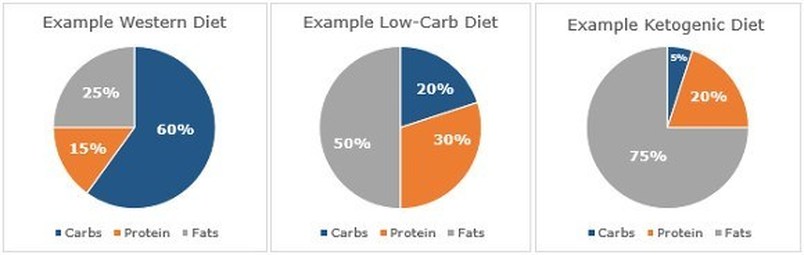
So what is Ketosis...  a metobolic state in which our human bodies no longer have glucose to burn for energy and use fat.  The fat ingested and the fat in storage breaks down into fatty acids and are converted into ketones by ketogenesis. I'll spare you the biochemistry of it all, and skip to the understandable stuff.  Like I have mentioned in earlier posts, our human bodies are super smart and know how to accommodate a lot of changes.  Some changes take a little bit longer then others, so each person may be a little different. Back to ketosis...I'm sure almost all of you are familiar with the Adkins diet or low carb dieting.  Well, the keto diet is like Adkins on steroids.  You are slashing your carbohydrate intake to almost nothing.  Most traditional Keto-dieters try to stay under 5% carbohydrates for their caloric intake, which is roughly 50g or less depending upon your activity level, size, and sensitivity.  A nice example is a simple apple or even a banana, one of these babies a day and you might be over your limit for carbs.  Let's not forget though, keto diets push the greens/veggies, and they too have carbs.  A lot less and mostly fibrous carbs, but you count them.  So in all reality, you aren't eating much of any fruit except for a few berries if you are lucky.  You are eating Fat, more Fat, and more FAT.  You are trying to consume around 75% of your diet as fat.  That leaves about 20% to protein.  Quick perspective here, a 2000 calorie diet on keto at 80% fat is 1600 of your 2000 in just fat alone.  That 1600 calories from fat is anywhere between 140-170g of fat. 
Picture
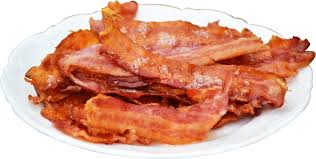
Above are great representations of our standard American diet, low carb diet, and the classic keto diet.  There is a DRASTIC difference in the amount of carbohydrates consumed (blue) between our standard and the keto diet.  Here's the evil little problem though, you have to keep your proteins in check while trying to get to keto and stay in keto.  See, glucose is the body's preferred fuel for energy.  If we no longer have glucose available because we drastically cut out our carbohydrates, then our bodies turn to any excess protein we may have ingested.  Believe me when I tell you, it's quite hard to keep those proteins down to only 20% when you are not a "scoop coconut oil out of the jar and eat it" kind of a person.  I find eating pure fat kinda gross honestly.  Try oil pooling and tell me how much you LOVE coconut oil sloshing around in your mouth for awhile, ick!  Back to protein, when you eat more than your body needs for a day, you trigger  something called gluconeogenesis.  Gluconeogenesis happens when your body converts amino acids (from protein) into glucose (for energy) which then increases your insulin and finally reduces ketones.  My last little reminder about the fat consumption is this, watch your calories!  Remember our macro counting that calories from fat are 9kcal/g as compared to protein and carbs only being 4kcal/g.  Those extra calories add up REALLY fast.  So many people think that they are going to be so full from all of the fat they get to eat, not really the case.  One pound of bacon is roughly 2000 calories, not to mention 169 grams of protein.  Again going back to the old 2000 calorie diet, this means you ate all of your calories in that pound of bacon and went over your protein by 69g. (20% protein in a 2000 calorie diet = 400 calories from protein divided by 4cal/g of protein and you are allowed roughly 100 g of protein) So much for chewing on a few packages of bacon.

Picture
Now you have a little better idea when someone says they can eat all the bacon and meat they want to....not the case. The protein will shoot you right out of ketosis. This is my major point with the keto diet, it's DARN hard to stick with and I don't think it should be a long term commitment for health reasons.
​
Do I encourage Keto Dieting? yes and no. Yes, I mentioned that it is hard, but what isn't hard that takes work?!?! Eating like crap is easy, but it's not getting you anywhere except into your grave. Let me start by the biggest question, is keto dieting safe? Yes, I feel if done properly with proper guidance and strictly short term, it is safe. The biggest safety factor is ketoacidosis. When there are too many ketones in your bloodsteam, your blood becomes too acidic. Ketoacidosis is the leading cause of death to people with diabetes under the age of 24. Be cautious with any new diet and know your body.

Pros and Cons

Pros:
  • Fast results. When we see something work so quickly, we get excited, encouraged, and more motivated to keep up the good work.
  • The plan is pretty simple (when you read it, lol) You just cut out anything with sugar/carbohydrates. An entire macro group to not worry about. Simple is sometimes really good for some people, so in that case I encourage them to try it.
  • There are great benefits and results to the control of Diabetics
  • Lastly (my favorite): decreases the consumption of processed foods. No more junky processed foods = more energy and less sugar crashing.

Cons:
  • STRICT! This feels like an understatement. It's hard to get into ketosis, but even harder to STAY in ketosis. One little slip up of a treat (even simply watermelon) and you have to start over.
  • EVERY single person metabolizes differently. One person might jump right into ketosis and be able to eat a few more grams of protein than the next. You can't get discouraged by your own speed, so be patient.
  • Not a lifestyle. This diet is meant to be short-term.
  • It is very difficult to gain muscle mass (your calorie furnace) in ketosis (more on that later)
  • SIDE EFFECTS: When a person's body is accustom to using carbohydrates as a fuel source for many years and even decades, it's a pretty big process to switch over and start using fat. This comes with side effects that are seen by many but not all. Many of these are related.
  1. Fluid loss is a pretty big factor. A lot of people get super excited to see the scale go down so quickly, but in all actuality, it is a lot of fluid loss. As our bodies use up the stored glycogen (sugar) in our muscles and liver, the cells release water with them.
  2. Water loss naturally means salt and mineral loss. It is IMPERATIVE that you stay very well hydrated and keep you electrolyte balance in check Many people add Himalayan salts to their food and supplement with bone broths.
  3. Fluid loss and salt imbalances also can lead to muscle cramps.
  4. Constipation
  5. Keto-breath
  6. Loss of energy
  7. KETO-FLU...it's a thing. Keto flu can be a combination of one, some, or all of the following: brain fog, dizziness, insomia, rapid heart rate, and simple flu-ish like symptoms.
Surprisingly, these are all pretty common. As your body tries to recognize the loss of carbs for fuel and has to switch to fat for fuel, it sometimes gets a little upset. Constipation is really common if you are not a huge veggie consumer and decrease the amount of fiber in your digestive track with the lack of carbs. Keep eating your higher fiber veggies! The energy turnaround is pretty quick in my opinion. You'll recognize it at first, but it does not take long for you to reverse those feelings and start to feel even more energy than before. The brain fog can also be a little interesting. Not going to lie here, I had it BAD. At one point I was trying to plug my water bottle into my cell phone charger in my car.
​
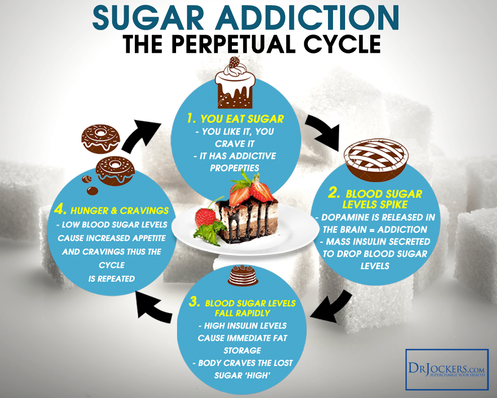
Left me briefly touch on toxin release. We are exposed to toxins everyday in the food we eat, air we breath, and things we touch. As toxins enter our bodies, they are both excreted out and stored. The toxins take refuge in our fat storage cells. As you start to burn up "old fat' , sort-a-speak, you have an increase in toxins trying to get excreted into your blood stream. Some may not notice this at all, but others can feel it and even see it. A lot of complaints I hear are skin reactions, an increase in acne and other skin irritations. For those that have pretty significant sugar addictions, the process of withdraw can also be pretty rough. Similar to alcohol and drug addictions, your body craves its sugar high. The cravings can be pretty darn harsh for some.
Picture
Keto-testing
Briefly let me touch on the testing portion of this diet.  A lot of new comers to the Keto-diet get super excited to buy the testing strips to see how soon they get into ketosis, and if they stay in ketosis.  These little strips test the excess ketones in your urine.  I don't recommend using them for the diet, and feel that they can be a huge disappointment.  Every person is different and will test differently.  Results can vary with what time of the day you are testing, when you last ate, and if you just exercised.  Ketones are only in the urine when they are spilled over into the blood when you have an excess.  Remember, ketones are now an energy source, so if you are expending a lot of energy in a workout, you are using up your excess ketone bodies for fuel.  That means you will not get a good reading for the keto strips.  They just aren't worth the time, money, and disappointment. 
Picture
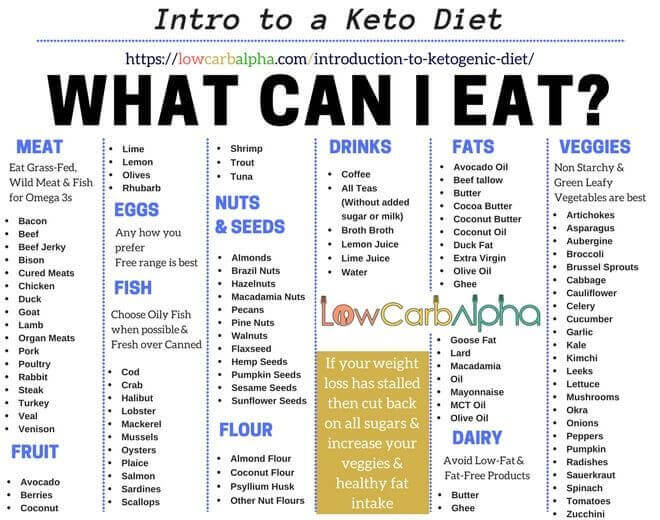
The above is a basic list of what is safe to eat to consume on the keto diet. Since the diet has gained so much popularity, many more fun and tasty treats have been created. One of my favorites are the keto bagels. After about the first week, you start to miss the buns on your sandwiches whether they are hamburgers at a BBQ or breakfast bacon, egg, and cheese sandwiches. Some genius started showing the world how easy it is to make bagels/buns out of almond flour, eggs, and cheeses along with some spices of your choice. They REALLY help you keep the diet going. Dark chocolate treats with peanut butter, stevia, and some coconut also help satisfy that sweet tooth now and again. The only warning, is again, watch those calories. The above life savors are pretty high up there in calories.

My experience...of course I decided to give Keto a whirl, honestly to see of I could discipline myself enough to keep it up for a couple of weeks. It was pretty tough at times, but I was super thankful for the millions of pinterest recipes for keto foods. I did have the keto flu for about 4 days in the very beginning, the brain fog and sluggishness were very noticeable. I also dropped a pretty good amount of water weight right away. After the first week, my energy came back and I feel was increased. I no longer had the "carb coma" after a meal. I did struggle a little bit more with body temperature. Staying warm when I was not active was probably the most difficult struggle, but on the other hand, my body heat was turned up when exercising and sleeping. I regularly do low intensity fasting cardio in the mornings, this quickly became a sweat-fest while on the keto diet. I also had an increase in night sweats, that I contribute to a hormonal fluctuation. My weightlifting had it's ups and downs while in Keto. I had some of my best "leg day" lifts in keto, but my upper body lifts suffered. My upper body strength decreased quite significantly plus I struggled with the shakes under the weights. Lastly, the reasons I no longer dapple in keto are because of the side effects I struggled with were more then the benefits. I truly enjoyed the increase in energy and the lower water retention (aka bloatedness), but these weren't enough to sell me. The night sweats, and body temp regulation problems were not fun, but the struggle with weightlifting and the dizziness tapped me out. At one point, my dizziness reached a scary point of not being able to stand up and walk to my kitchen from my living room without grabbing the wall to stop myself from falling over.
​
Again, I do feel this diet can be very beneficial for some people. Those that have significant sugar addiction can likely benefit the most. It's certainly worth a try if you want to test your discipline and reset your metabolism. I think forcing your body to burn fats instead of the constant sugar feed is very beneficial. The first go around with Keto will probably be your most difficult, but also the most noticeable for the positive outcomes as well. Personally I stick to lightly dipping into Keto each morning when I am fasted from my intermittent fasting plus the light cardio. Along with the intermittent fasting, I carb cycle when I am trying to get myself back in check and/or cut. This allows me the benefits of going near keto, but not the struggles of actual keto dieting. Next week I'll bring more info to you about carb cycling.
Picture
4 Comments

Intermittent Fasting

6/20/2018

0 Comments


Summer Health and Fitness Series

Picture
As promised last week, today we are working through Intermittent Fasting.  This is one of my favorite tools and topics.  I LOVE LOVE LOVE intermittent fasting and I can't wait to tell you why.  We all know what fasting is basically not eating for a period of time.  Intermittent fasting is just pre-planned periods of not eating.  If you are even remotely in tune to the health and fitness world, then I am quite certain you have likely heard of IF (intermittent fasting) within the last few years.  It's really a thing, a darn popular thing, and it deserves all the recognition that it has been given.  IF goes  beyond just weight loss, and I'm excited to share those extra details with you.  More importantly though, I feel IF is a huge personal discipline that you can control, and makes you feel amazingly successful.  Just to quick clarify, IF, may not be for everyone, especially those with serious preexisting health complications. Like everything else, you need to use precaution. 

Years ago, when I was young, it was preached to us to ALWAYS eat breakfast.  "It's the most important meal of the day."  I do agree that breakfast is important for our kiddos out there.  I would not send the little brain and body of my 8 year old to school without having healthy foods in their tummy.  As for adults, the same is not needed on a daily basis.  Neither is eating 5-6 small meals a day.  Our bodies have NEVER been designed to continually eat throughout the day.  Just look into the physiology of our bodies, they are amazingly adaptable.  This may be cliche, but our ancestors did not have access to a refrigerator full of food 24-7.  They weren't breaking out the Ben & Jerry's at midnight for a little snack.  They ate abundantly when food was available, then literally fasted until they hunted for their next meal.  Back to my main point here, you will NOT die if you intermittent fast.  You may think you are going to die from hunger the first few days, but I assure you that hunger for a few hours will not kill you. 
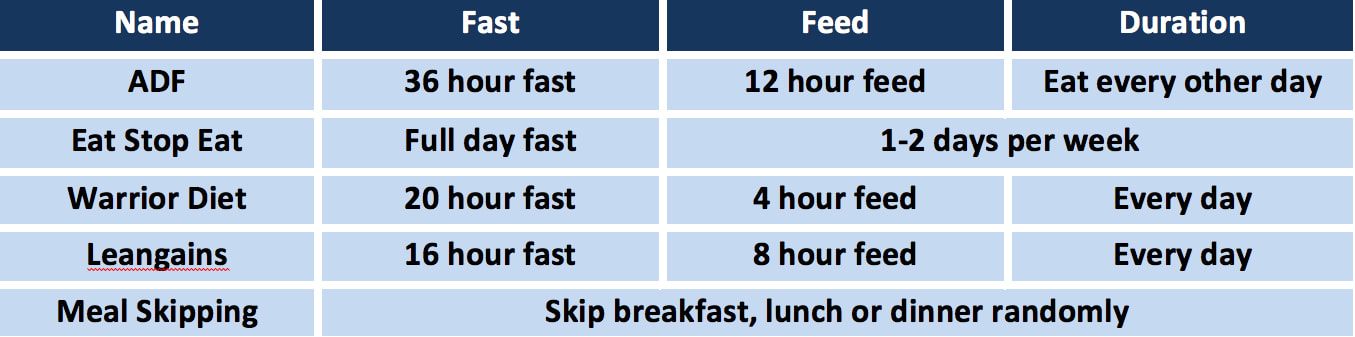
INTERMITTENT FASTING PLANS:

Picture
*ADF (alternate day fasting)
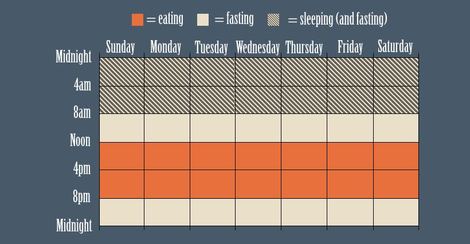
Among the above, the Leangains is the most popular and easiest to make into a lifestyle.  It is honestly not as hard as it sounds, and I speak from experience.  I have been intermittent fasting for almost two years and I absolutely love it.  The Leangain is also known as the 16:8, 16 hours fasting and 8 hours of refueling.  This schedule is easily adapted to your daily regimen by simply skipping breakfast.  (Breakfast aka "break fast")  Here is a sample below for the 16:8 schedule.

Picture
 Dependent upon how late you want to eat or how early you need to eat, is how you configure your own schedule.  If you work until 7pm and want to go home to have a nice dinner, then your fast can start at 8pm and finish at noon the next day.  If you feel you need to eat earlier then noon, you can plan to eat at 10am and be finished eating for the day at 6pm.  In the above chart, the orange is your refueling (eating) window.  The shaded area is easy fasting since you are asleep.  The fasting conscious work goes into the hours you are awake before you break your fast, and the hours following your last meal before bed. 

In all honesty, IF can be a great tool to help with weight loss, since you are cutting out those sneaking times that you would indulge in extra snacks, like before bedtime.  I am not going to lie to you and say it is easy, because it is not easy at all in the initial few weeks/months.  It's been almost 2 years, and I still get super hungry before I break my fast, but I actually enjoy it A LOT.  I know that sounds a whee bit crazy, but I have a sense of control and discipline that I am proud of each and every day.  When I get to my first meal of the day and break my fast, I am proud each and every day.  What's even more helpful is the change in food choices when you are actually hungry.  I can almost guarantee that most of you decide to eat whenever you feel simply hungry.  IT'S OKAY TO FEEL HUNGRY!  It's actually good to feel hungry, and hear me out on that...when you are truly hungry you chose to eat healthier.  You are not looking to grab a piece of candy, a muffin, or a donut, because you start to crave healthy protein rich foods to fill you up and give you energy.  Nothing will make you feel worse then crappy food on a truly empty stomach. 

Example: We had a patient a few years ago ask us about nutrition and eating habits for losing weight.  We mentioned the first meal of the day being a chicken breast and veggies, to which she/he thought was just awful.  She/he said there was no way they could eat chicken as their first meal.  Well guess what, when you have been fasting for 16 hours, chicken sounds darn good and tastes even better.  The intermittent fasting can truly help as a tool in you arsenal to help you get fit, lose weight, stay fit, etc but it has so many other amazing benefits that we are learning about all of the time. 
  • As mentioned above, fat loss is a great result of IF.  I will mention that you still have to be diligent about eating healthy when you are refueling in your window of eating.  This does not mean BINGE when you start to eat.  The basics: when we are fasting, you bodies use up all the glucose that we have readily available as an energy source.  If we are not continually eating, the glucose gets used up and our bodies turn to a different source of energy, FAT.  Some people refer to this as a cyclical ketosis.  Think about this...you eat a healthy dinner with good carbohydrates.  By bedtime those carbs are dwindling as a energy source.  If you sneak a crappy snack before bed, once again you body will continue to use that carb rich snack for fuel.  If you IF and don't have that snack, your body will turn to its fat storage to make its fuel.  Imagine the little fat furnace burning by the time you skip breakfast and wait until lunch to eat.  Plus studies show that the average calorie reduction in those that intermittent fast is 20%-40%.  So yes, it can be a great tool for weight management.
  • HORMONES! 
  1. Healthy hormones are KEY!  The major player in the hormone world and intermittent fasting is our Growth Hormone.  Growth Hormone is a peptide hormone that stimulates growth, cell reproduction, and cell regeneration.  Growth hormone is released mostly at night while we are asleep hence the importance of sleep for tissue repair.  Our bodies will continue releasing Growth Hormone until we break our fast.
  2. Leptin: fasting increasing the leptin hormome which is a key regulator in hunger and directly impacts fat loss by metabolism regulation.  Leptin is a key component is our thyroid produced hormones, T3 and T4.
  3. Insulin: While fasting, you are giving insulin a break.  No sugars to digest, no insulin released, and this equals increased insulin sensitivity.  In this sugar loving over processed food society, our bodies are subjected to constantly producing and releasing insulin to stabilize our blood sugar.  Over time, this system gets burned out and you start facing the scary road to diabetes since the insulin sensitivity is lost.  As your insulin sensitivity is healing and increased, your body starts processing food more effectively which decreases the risk of storing fat.
  • Gut Health: I am sure almost everyone not living under a rock today has heard something along the lines of food sensitivities, gluten intolerance, irritable bowel, lactose intolerance, etc.  Many of the main causes for these issues along with more substantial problems like immune dysfunction and autoimmune diseases are believed to be derived from poor gut health.  Intermittent Fasting gives your gut microbes a break and time to heal.  The newest discoveries being made have found that fasting activates a gene that strengthens the gut barrier which protects us from harmful toxins that can leak into our bloodstream and decrease our immune system.
  • Cellular Autophagy: WAIT! Before I lose you on the scientific name, bare with me because this one is most important.  Personally I still Intermittent Fast because of this super cool and important info.  Cellular Autophagy is just a fancy way of saying "cell clean-up".  Similar to the growth hormone above, cellular autophagy happens when we are fasting and our bodies are cleaning up shop sort-a-speak.  Our bodies again and looking for an energy source and our innately intelligent system turns to eat up the trash in our cells that are not as productive.  When you break your fast and start eating, the autophagy turns off and goes back into using the new food for energy.  Amino acids and insulin are autophagy's negative regulators.  Autophagy contributes to cellular development and differentation, suppresses tumors, and supports immunity.  When people discuss fasting reversing the damage done to your liver, they are referencing the fact that most of our damaged cells end up in the liver and are replaced through our metabolism when looking for a source of energy/fuel during fasting.  Research has connected autophagy with conditions including cancer, autoimmune diseases, neurodegenerative diseases, as well as aging.  Some has gone so far to say that lengthy fasting has completely regenerated their immune systems and have helped fight cancers. 
  • Brain Goodies! Recently, information and research has been released on the foundation that fasting triggers neuron regeneration in the brain.  Fasting has increased Brain-Derived Neurotrophic Factor (BDNF), a protein that basically fertilizes our brain cells, promotes neuron growth, and builds and maintains brain circuits.
Picture
As I mentioned earlier, fasting is not the easiest thing in the world to do.  It takes a lot of patience and even more discipline.  I wholeheartedly encourage everyone to at least give it a try and see how you do and feel.  I challenge the discipline side of you more then anything else.  Maybe start slow on the 16-8 and try it just a few days a week, then move into it on a regular basis.  Like everything I have blogged about, it's easily a lifestyle that is manageable for better health.  Plus, you don't have to be crazy strict about it and it's even flexible.  If your significant other wants to go out for a big breakfast, GO!  You can skip that day or better yet start your fast earlier in the evening. 

My personal notes...I stumbled upon IF years ago while working on dropping baby weight and getting healthier.  It is a useful tool for me with weight management because I truly love to eat.  This keeps my snacking at bay and helps me make much better whole food choices when its time to eat and I'm REALLY hungry.  I have learned that I actually enjoy feeling empty and hungry rather than bloated and full.  IF forces me to keep hydrated, because that is all you are having while fasting.  Lots of hydration is key to helping you through your fast.  I still enjoy my coffee, tea, and mineral waters during my fast, as long as they don't have calories.  Please don't consider fake artificial sweeteners friends, just write your last will and testimony instead since that crap WILL kill you.  Lastly, I will continue IF because it gives me such a sense of control and pride.  Like I said earlier, when you make it through to the end of your fast successfully, you feel so accomplished and proud of your discipline.  The amount of other wonderful benefits to your body when fasting excites me.  Our bodies are so incredibly intelligent and down right cool, keep working hard on the only body you have right now.

To Our Health
Dr. Kallie Wegmann
0 Comments

Mindful Changes

6/13/2018

0 Comments


Dr. Kallie

Health and Fitness Series

Make it Simple

Picture
Creating a lifestyle change and sticking with it MUST be made simple.  Drastic changes are proven to unsuccessful for years upon years.  Last week I brought the Macro information to you and pushed the importance of calorie deficit.  Above is a great picture that speaks volumes for describing "calorie deficit".  Once you do the math and figure out your baseline for calories, then follow that up with macro and calorie counting you start to make the simple connections of how to lose weight if that is your goal.  I hope many of the readers have experimented with this already, and found the WOW factor.  I have yet to meet someone that truly counts their calories and isn't a little shocked with the amount of calories they consume in a day.  We are bombarded with hidden calories everywhere and it's incredibly easy to pass right on by your calorie cutoff.  

I would like to give you a little bit of perspective that will hopefully go a long way.  These are everyday examples that I think a lot of you will relate to or know of someone almost instantly.   One of my favorite examples is the "runner".  There are so many "runners" that try so hard to lose weight and don't even shift the scale a single ounce.  There are two huge reasons for this: they are still eating more calories then they are burning, and secondly, their body is not being challenged by the same ol' runs every day.  I'll touch on this a lot more when we dive into workouts, but knowledge that our bodies are incredibly intelligent and will QUICKLY become adapted to repetitive workouts is a major key.  We have the most intelligent systems on the planet.  Our bodies learn quickly to try and become the most energy efficient they can be in the shortest amount of time.  If you start running a mile today, that mile becomes easier to run a week from today, even more in a month, etc.  When you get into the physiology of it all, our bodies learn to transport nutrients faster to the needed areas of our bodies to get the energy delivered.  After a few weeks +, our heart isn't as stressed and works with more ease with its conditioning, which also decreased the amount of energy needed.  There is not a significant decrease in energy needed, so we have to go back to the first point.  Too many calories are still being consumed to not create a deficit.  There is this false idea in many peoples minds that, "omg, I just ran 3 miles, I need to refuel and EAT."  Yes, you do need to eat, obviously, but what and how much are you eating?  The mentality of I can eat whatever I want because I ran or lifted weights hard, maybe did some crossfit, or all of it, is the WRONG mentality.  The following picture is one of my favorites.  How to view food:

Picture
I would love to see this plastered up everywhere you can buy food.  Please read it daily as you begin this process of a lifestyle change.  How often have you given up on an entire day because you didn't have the willpower to stop eating the cookies?  Or maybe you feel like you just can't make any changes because you don't deserve to, so you'll just keep eating out of control and constantly convince yourself that you are happy with the way you are right now.   Are you happy when climbing a flight of stairs makes you winded?  I didn't think so, and nor should you be.  You need to make the realization that food is not for pure comfort, a reward, or a punishment.  Food does not need to control your life.  Food is a necessary tool to our survival, but like being irresponsible with drugs, alcohol, sex, whatever, it can literally be lethally dangerous. 

One of the coolest things I have learned about my own body is it's own response to eating healthier and working out.  When you deliberately put workouts into your day, you start to make healthier choices for meals and snacks.  After cleansing out the unhealthy foods from your diet and sticking to your workout plans, you'll easily notice your cravings starting to shift.  The body starts to crave good fuels, you sleep better, your energy levels change increase.  The subconscious connections of knowing that you need to stay below a certain amount of calories, plus your knowledge of healthy calories all starts to tie together.  When you are coming down from your workout "high" and start to feel REALLY hungry, 4 ounces of grilled chicken breast and huge bundles of fresh veggies to fill your tummy sounds a whole lot better than a candy bar.   
The pictures above represent vastly different portions of food.  One key is learning to control portions and still living life, making this less drastic and able to be a lifestyle, you can still have treats!  You just can't have them all day and every day.  I'll be the first to admit, I LOVE donuts, I love caramel sticky rolls, I love chocolate, I don't eat these things regularly.  Except maybe chocolate, but I keep my chocolate portion tiny so I can still enjoy it without over indulging.  If I decide that I am going out for breakfast and going to have a caramel roll, then I know that I need to eat super clean and small the rest of the day, plus throw in a pretty good workout.  I don't just throw in the towel for the day and say to heck with it all today.  Keep things simple with the knowledge that you are gaining and know that this is a lifestyle not a crash diet.

Understanding the deficit.  If you don't take the time to do the math for needed caloric intake you are going to struggle with the entire process.  If you don't take the time to HONESTLY analyze what you eat in a day per your macros, you are going to struggle with the entire process.  A little perspective here: 1 pound of fat is 3500 calories.  If you simply ate 10 (TEN) extra calories every day for a year, you would put on a pound a year of fat.  Over the course of 10 years, you have now gained 10 pounds.  Maybe not significant to you, but lets look more into this math.  One candy bar a day is roughly 215 calories.  One candy bar a day for one month, and BOOM-that's 2 extra pounds of body fat. (3500 / 215 = 16 candy bars or one candy bar a day for 16 days)  Same idea with soda, beer and other junk foods.  Those calories add up quickly and get overlooked so easily.  Those small snickers bars that you grab after lunch do add up over time and a shorty amount of time at that.  It doesn't always have to be junk food either.  Here's where that runner come back in that can't lose weight even though he/she eats healthy.  The extra cheese stick, extra handful of healthy walnuts, extra banana etc, they can all still put you over your needed deficit number.  I'm not going to tell you this will be straight out of the gate easy for anyone, it's a process.  You might be breaking lifelong habits, it will be hard, but I do promise you this...it gets easier, you become more aware, you'll feel better, and above all is feeling happy/proud of yourself.  This is not an intended battle or imprisonment.  This is a step toward feeling better about yourself.  Being able to keep up with friends and family on adventures like bike rides, swimming at the beach, running for a fun cause with a group.  

Keeping it Simple

Picture
Truth!  How many of you recognize this all to well.  In the 1990 it was all about FAT being the main reason for weight gain and obesity.  Then along came the Atkins era and carbs with the cause of all weight problems.  This decade we are focused on sugar being the closest thing to a heroin addiction and making us all obese.  Truth be told, fats, carbs, sugar, they aren't solely to blame.  You can eat a package of gummy worms as your single meal for the day and lose weight if its below the calories you need.  Now do I promote this, heck NO!  I promote wholesome healthy foods that refuel us the way we are intended to use those fuels.  A fun CHALLENGE (and I wholeheartedly mean challenge) is to eat only whole foods for a week straight.  You will be VERY surprised how easily processed foods have slipped into our daily lives.  Ultimately, eating only whole foods and staying in a caloric deficit is the picture-perfect method.  Likely the hardest, but also the most beneficial.  I'm not going to preach it at this moment, because right now our goal is to make attainable lifestyle changes, and to keep this simple.   
Picture
Next week I plan on discussing Intermittent Fasting.  This is an incredible tool to use not just for weight-loss, but also for your mindset.  The key to next week is to learn that it is okay to feel hungry.  Let yourself get hungry by not eating around the clock.  I promise you that feeling hungry won't hurt you.
0 Comments

Summer Health and Fitness Series

5/23/2018

0 Comments


Dr. Kallie

Health and Fitness Series

Picture
As we head into Memorial Day weekend and the official kickoff to summer, one thing in the back of your mind is likely, "fitting into summer".  That's a pretty general statement that covers a lot of ground.  Are you ready to hop on your bike and hit the trails with your kids, grandkids, nieces, or nephews?  Are you ready to shed some layers of clothing and slip right back into those cute shorts or summer dresses you put away last fall? 

What about digging out that swimsuit for the beach or the boat?  I'm pretty sure a lot of honest people can say they get a little worried that everything will fit.  It really doesn't matter if you are in great shape or not, we almost all feel it and its okay.  With that being said, it helps your confidence knowing that you have kept yourself active and continue to eat healthy...or maybe not. 

I'm really excited to spend some time this summer sharing my experiences and thoughts about health and fitness with everyone.  As a Doctor of Chiropractic, I've studied the physiology of the body and health in depth.  As a woman, mother of three, and nearing 40 years of age, I have a little bit of experience to throw on top of it all.  Getting healthy and fit or staying healthy and fit is a lifelong process.  One of my favorite quotes, "Success isn't owned.  It's leased, and rent is due every day." ~J.J. Watt

This summer I will bring to you my knowledge and experience with becoming a better you and more knowledgeable you.  Nothing is an exact science and every single person on this planet is different.  So open yourself up to learning about what YOU need to make YOU a healthier version of you.  You only get this life once, don't miss out on the best parts of it because you have let yourself go.  Let's get started!


Love Yourself

Picture
The first step to making a change for yourself, is love yourself.  The process of getting healthier has to start with caring enough about yourself.  Stop punishing yourself for past mistakes.  Let go of the mess behind you and focus on what is in front of you.  You should know by now that you can's go back and change anything, but you sure as heck can use those hardships to fuel the new you.  Forgive yourself first, love yourself, and respect the process without comparison to others. 
  
Listen to this closely, you cannot compare yourself to anyone but yourself.  This is one of the best examples I can give to you, I've seen a heavy set person (maybe 20-40 lbs overweight) destroy a half marathon, and I've seen a shredded lean person not be able to run 200yds.  So which person is healthier?  I am not going to get into the nitty gritty with that one, but I know I'd much rather be overweight and able to run with my kids then a skinny couch potato. 

Success is measured at so many different levels.  Personally I think absolute success is someone whom is 100% confident in the way they feel, look, and function.

FUNCTION: "Can you pick up your bike and go for a ride with your friends or kids without any hesitation of your physical stamina?"  "What about doing a summer 5K with you kids or friends?" "Can you simply stay active and moving at your job without feeling exhausted by the evening?"

LOOK: "Do you feel confident pulling the summer clothes back out?" "What about throwing on that swimsuit for this weekend?"  Super personal question, "Do you feel confident in your birthday suit?"

FEEL: "Do you feel successful?"  "Have you accomplished all of the above?"
If you feel you are succeeding, then I am so proud of you.  You are doing great and a wonderful inspiration to others.  "Is it time to step it up and make a few or a lot of changes to make a better you?"  Let's not wait anymore and get moving.

Next post I am going to go over some basics.  There are hundreds of different trends and philosophy's out there that try to suck you in without really teaching you the basics of health and fitness.  The actual process is not rocket science, but knowing how to weed out the junk is far more work.

Challenge of the week: Find a journal and be ready to use it.  Write down 5 things you love about yourself and 5 things you want to improve on for our future journey. 

Dr. Kallie Wegmann

0 Comments

    Authors

    Dr. MJ Wegmann,
    Dr. Kallie Wegmann and Dr. Chelsea Bachelor bring you the latest in health, fitness, wellness & prevention and science-based spine research.

    Archives

    July 2023
    April 2023
    March 2023
    February 2023
    January 2023
    May 2020
    April 2020
    December 2019
    June 2019
    April 2019
    February 2019
    January 2019
    October 2018
    September 2018
    August 2018
    July 2018
    June 2018
    May 2018

    Categories

    All
    Fasting
    Fitness
    Gut Health
    Healing
    IF
    Leaky Gut
    Nutrition
    Research
    Spine
    Subluxation
    Summner
    Supplements
    Thyroid
    Wellness

    RSS Feed

Home
About
Contact
Dr. Wegmann is one of the best Chiropractors I've ever been to. I own a house in L.A., Miami and N. Michigan and spend a lot of my working time in New York City. Dr. Wegmann is passionate and brilliant when it comes to spine knowledge and care. -J.H.
I really admire them for being more than willing to ask for help from other professionals in the field when they don't have an answer to my question. They aren't even slightly arrogant, and I'm confident they are the best choice in town. ~Jim
  • Wisdom Hub
    • Location & Hours
    • FAQ
    • Clinical Excellence
    • Spine Health >
      • Spinal Orthosis
      • Neck Problems
      • Pelvic Obliquity
      • Headaches
      • Student Athletes
      • Denneroll Pillow
      • Advanced Spine Research
    • Patients >
      • Patient Portal (Members Only) >
        • Advanced Spine Research
        • Cervical Spine Exercises
        • Low Back Exercises
        • Scoliosis Care
        • Advanced Scoliosis Care
        • Accelerated Aging
        • Collagen
        • Asthma and Chiropractic
        • Nutrition for Pregnant and Nursing Mothers
        • Women and Children
        • Pediatrics
        • Carpel Tunnel
        • Aspiring Helpful or Hazardous?
        • 5 Health Secrets
        • Health Resources
        • Nutrition Plans
        • Recipes
        • Food Addiction
        • 7 Key Steps To Long Term Weight Loss
        • Understanding Gluten
      • Clinical Excellence
      • Loss of Curve
      • Refer a Friend
      • Lecture Series
      • Evidence-based Care
      • Medical Massage Therapy
      • Your First Visit
      • Phase I Relief Care
      • Phase II Corrective Care
      • Phase III Wellness Care
      • Chiropractic History
      • The Chiropractic Story
      • HIPPA Information.
    • Virtual Office Tour
  • Health Store
  • Providers
    • The Team >
      • Dr. MJ Wegmann and Dr. Kallie Wegmann
      • Dr. Chelsea Bachelor
    • Refer a Patient
  • 20th Anniversary